
Criminal Cases in the Sabine County Courts
Sabine County criminal cases divide by offense level and court authority. The 1st and 273rd Judicial District Courts exercise general district jurisdiction and hear felonies. The constitutional County Court keeps ordinary Class A and Class B misdemeanor jurisdiction. Its special Sabine County limit concerns civil work, not the general criminal docket. Justice courts and Hemphill Municipal Court keep their own fine-only cases, early magisterial records, and warrants. A name search at one office cannot rule out a case in another.
The Sabine County District Clerk safeguards felony pleadings, orders, judgments, indexes, and court actions. The County Clerk holds County Court misdemeanor files. A complaint may support an early step, an information may formally charge a misdemeanor, and a grand jury indictment states a felony accusation. Those papers can differ from the charge first written at booking. The judgment is the best source for what the court finally decided.
The Texas Judicial Directory helps confirm the current court, clerk, judge, and prosecutor structure. Its official directory view also shows why a Sabine County case search must begin with the correct court.
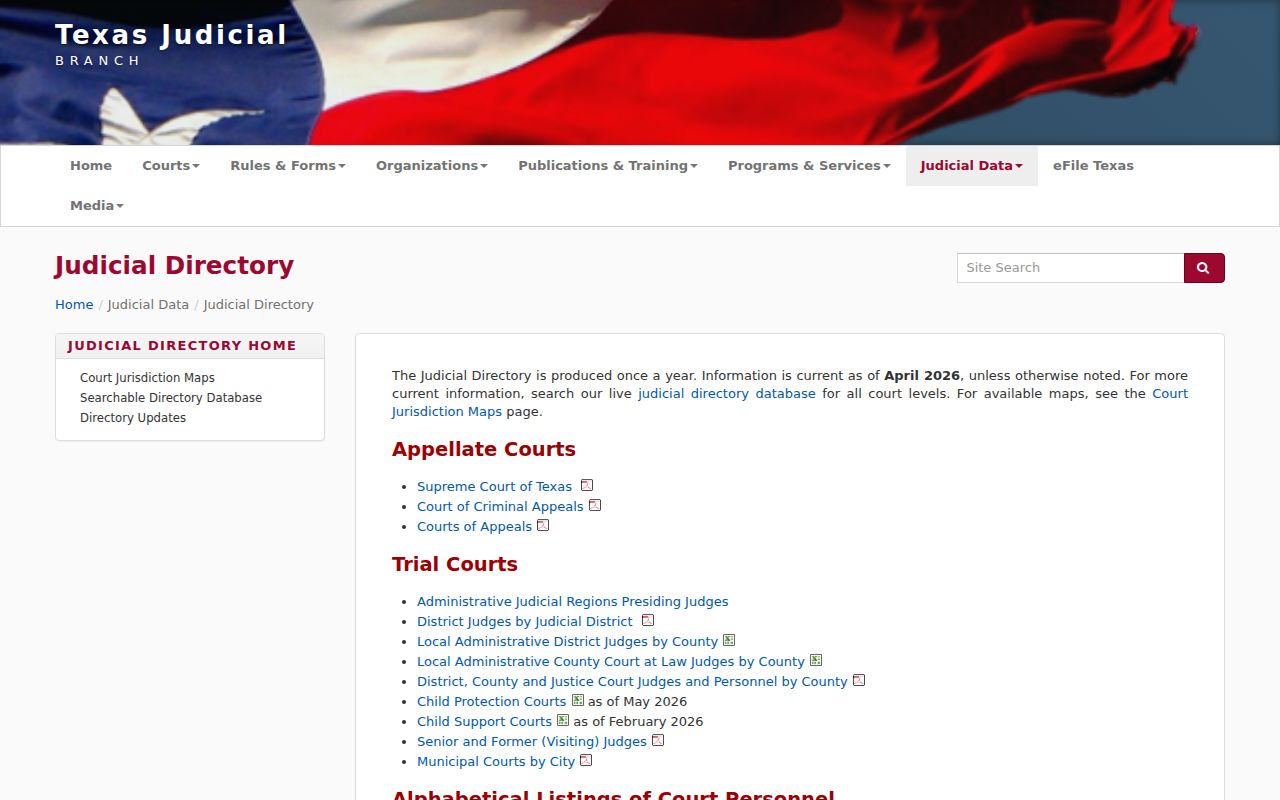
The directory supplements the local clerk pages, but it does not replace a request for the actual Sabine County criminal case file.
Two Sabine Criminal District Courts
The 1st and 273rd Judicial District Courts both serve Sabine County. Their coordinators use different telephone numbers and neighboring-county infrastructure because each district covers more than one county. That does not send a Sabine County filing to another courthouse. The District Clerk at 201 Main Street in Hemphill remains the local filing custodian for both courts.
Ask the clerk to identify the assigned court from the cause number or party name. Then request the docket, charging instrument, and judgment from that same cause. A coordinator can help with court settings, but the clerk controls copies and the official index. This split is easy to miss when an out-of-county area code appears beside a Sabine County court name.
How to Search Case Records
No official anonymous Sabine County criminal case portal was found. The Texas Judicial Branch access FAQ also states that Texas has no single statewide trial-court search. Start with a cause number when available. Otherwise, give the clerk a full legal name and enough date or filing context to distinguish people with similar names.
The official access explanation makes clerk-by-clerk routing central to a complete Sabine County case search.
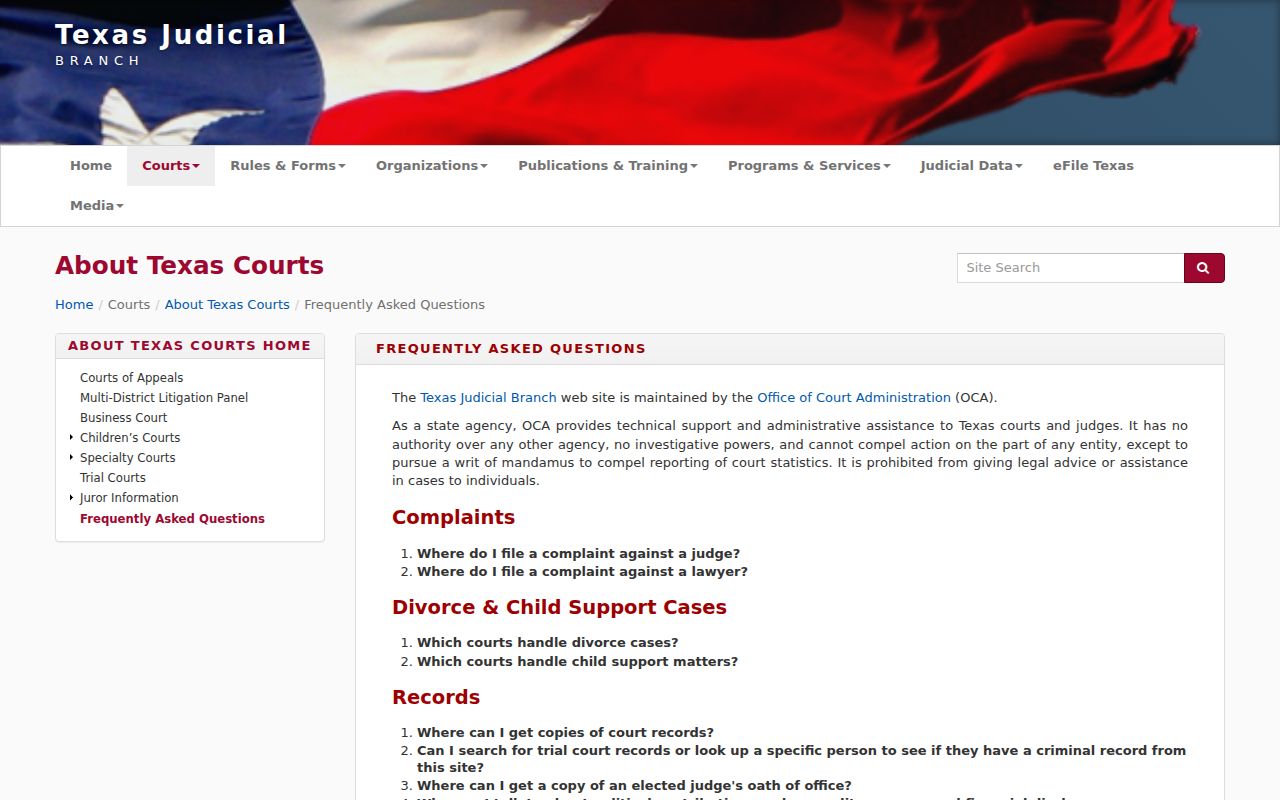
Follow the local path before treating a remote service as complete.
- Call or email the District Clerk for a felony cause. Ask which years are indexed electronically and which require an older paper search.
- Contact the County Clerk for a Class A or B misdemeanor. Bring valid identification for counter transactions under the clerk's 2026 rule.
- Ask the issuing justice or municipal court about fine-only matters and its warrants. These dockets do not merge into a district search.
- Request the docket sheet, charging instrument, judgment, and sentence by cause number. Ask whether inspection, emailed copies, or certified paper copies fit the need.
- Use re:SearchTX only as a supplemental document channel. Confirm every result and every missing result with the Sabine County clerk.
| Request field | Type | Need | Use |
|---|---|---|---|
| Cause number | Text | Best identifier | Points to one Sabine County case. |
| Full name | Text | Fallback | Supports an index search when the cause is unknown. |
| Filing year | Year | If known | Narrows electronic and archived indexes. |
| Court level | Choice | Recommended | Routes felony, misdemeanor, or fine-only work. |
| Document type | Choice | Recommended | Identifies docket, indictment, judgment, or certified copy. |
Sabine Case Portal Limits
re:SearchTX is a registered-user document service for participating courts. Participation and document availability vary. It is not a guaranteed name index for every Sabine County criminal case. A blank response may reflect court participation, account access, an older paper file, or a separate lower-court docket. It does not prove that no cause exists.
The re:SearchTX service view shows the remote access layer that may assist a records search.
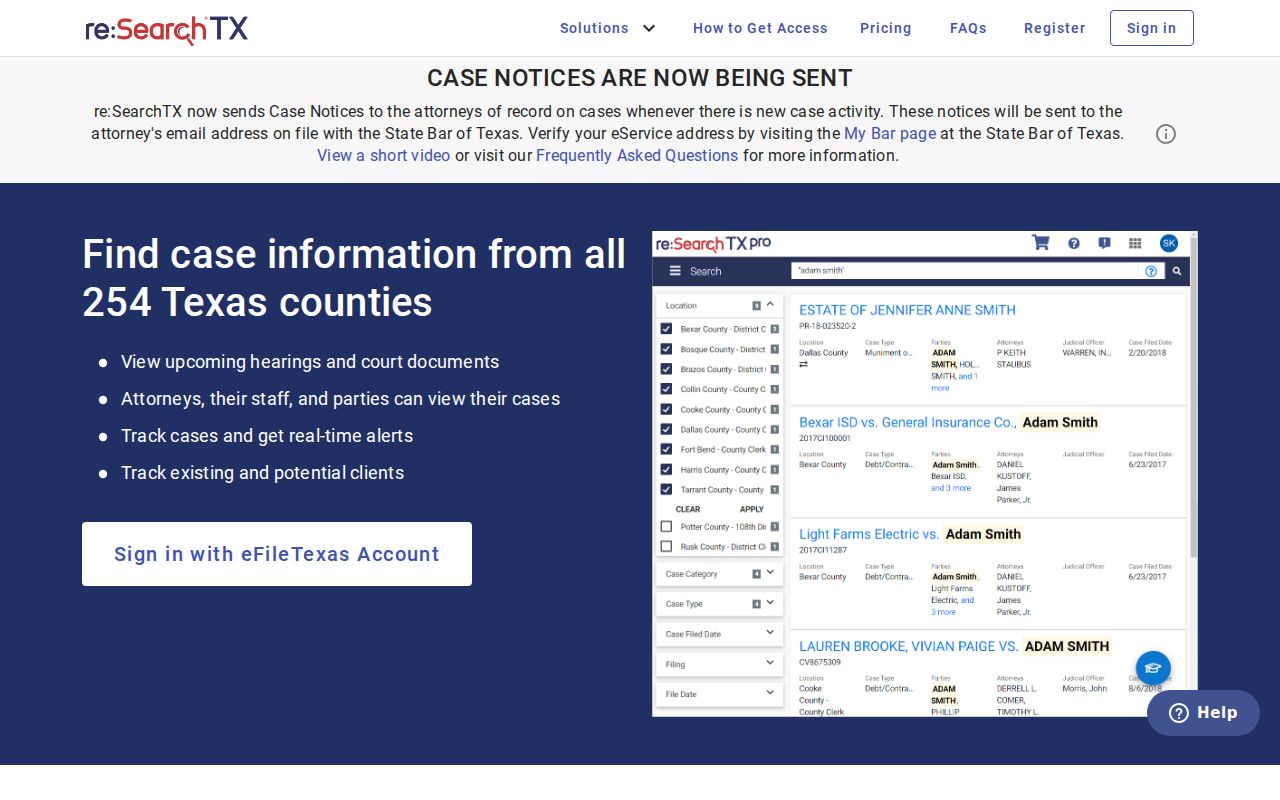
For a complete Sabine County answer, compare any remote document with the clerk's index and final judgment.
eFileTexas serves electronic filing. Filing access is not the same as anonymous public searching.
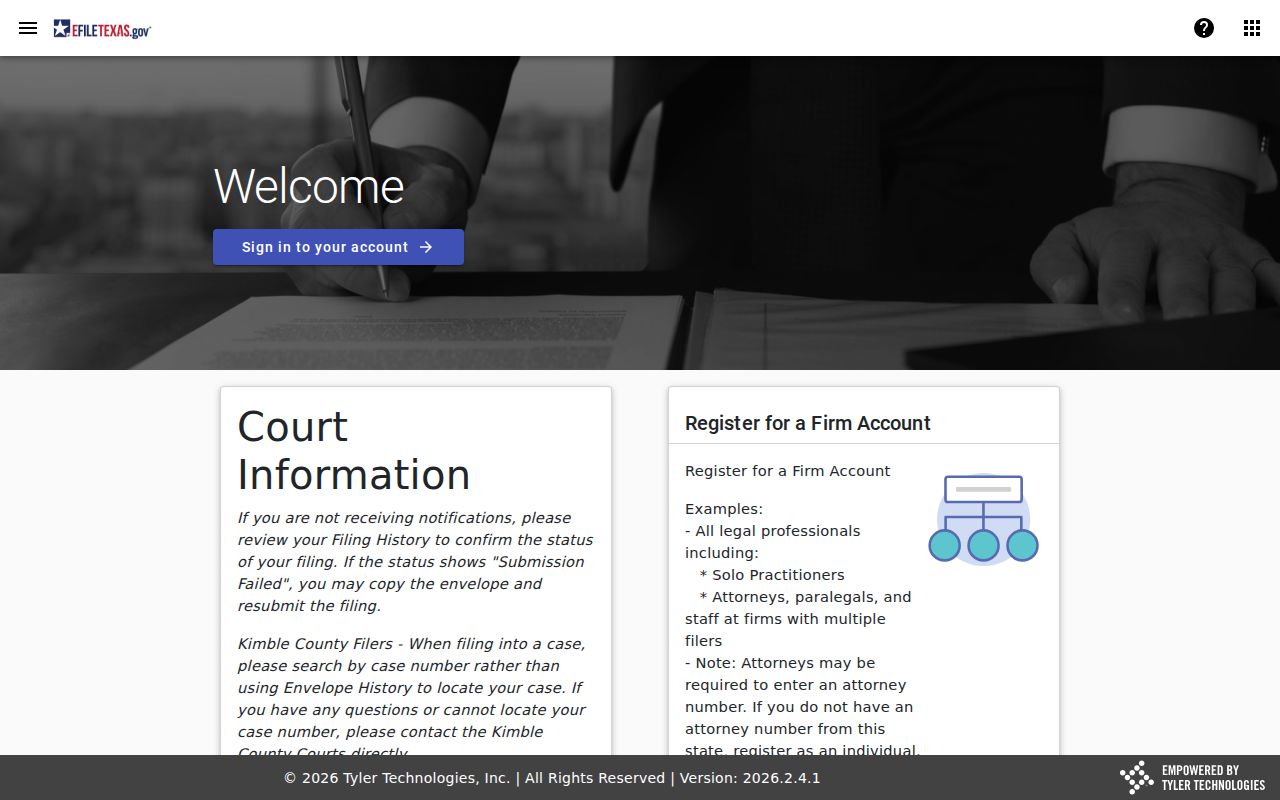
The distinction matters because a filer can use a system that does not give the public a full Sabine County criminal docket search.
Note: A no-result remote search does not establish that Sabine County has no criminal case under the name.
What the Case File Shows
A Sabine County criminal file traces the court's work after a charge is filed. The cause number and court tie the papers together. The complaint, information, or indictment states the filed accusation. Docket events show settings and rulings. Pleas, verdicts, disposition, judgment, and sentence explain the outcome. Bond entries, costs, restitution, community supervision, warrants, appeals, and linked causes may also appear.
| Case Number & Court | Identifies the cause, assigned Sabine County court, filing date, judge, and status. |
|---|---|
| Charging Document | Shows the complaint, information, or indictment and the offense degree filed by prosecutors. |
| Docket Entries | Records settings, motions, orders, appearances, pleas, and other court events in time order. |
| Hearing Dates | Lists scheduled or completed proceedings, subject to later changes recorded by the court. |
| Disposition & Judgment | States dismissal, acquittal, deferred adjudication, or conviction and the signed judicial result. |
| Sentence & Conditions | May show confinement, fine, costs, restitution, and community-supervision terms. |
The case file answers a different question from the arrest report. The report records an officer's action. The filed case shows the prosecution and court response. For the front-end event, use the separate Sabine County arrest history resources, then return to the judgment for the legal outcome.
Reading Sabine Criminal Outcomes
Disposition means the result of a charge. A dismissal ends that charge without a guilty judgment. An acquittal is a not-guilty finding. A conviction is a judgment based on guilt. Deferred adjudication places a person on community supervision while the court defers a guilty finding; successful completion may lead to dismissal, but it does not erase the case file by itself.
- Arraignment
- The stage when the accused is formally called to answer the charging instrument.
- Nolle prosequi
- A prosecutor's formal choice not to continue a stated prosecution, often reflected as dismissal language.
- True bill
- A grand jury's return of an indictment based on probable cause.
- No bill
- A grand jury's decision not to return an indictment on the submission.
- Capias
- A court order directing custody in connection with a filed case or failure to comply.
Compare the charging instrument with the judgment. Enhancements, reductions, and amendments can change the offense degree after booking. Texas Penal Code Chapter 12 places felonies in district court, Class A and B misdemeanors in County Court, and most Class C fine-only matters in municipal or justice court. The final signed order controls over a brief portal label.
Stages of a Criminal Case
A Sabine County criminal cause begins only after prosecutors choose a filed charge. A complaint can support the early process. A grand jury may return an indictment in a felony matter, while an information is used where Texas procedure permits. Arraignment calls for a plea. Pretrial work can include motions, discovery issues, bond questions, and settings. The cause then reaches a negotiated plea, trial, dismissal, or other disposition. If guilt is adjudicated, the judgment records the sentence.
Case flow: Charges Filed → Arraignment → Pretrial → Plea or Trial → Disposition → Sentencing
There is no reliable generic time estimate in the Sabine County research. Court schedules, pending motions, grand-jury action, and case complexity can change the pace. Use the current docket and coordinator contact for a particular setting.
Sabine Criminal Rules and Filing
The Texas local-rules search filters official rules, forms, and standing orders. It helps a reader find procedure that may govern a Sabine County criminal filing, but it does not search defendants or causes.
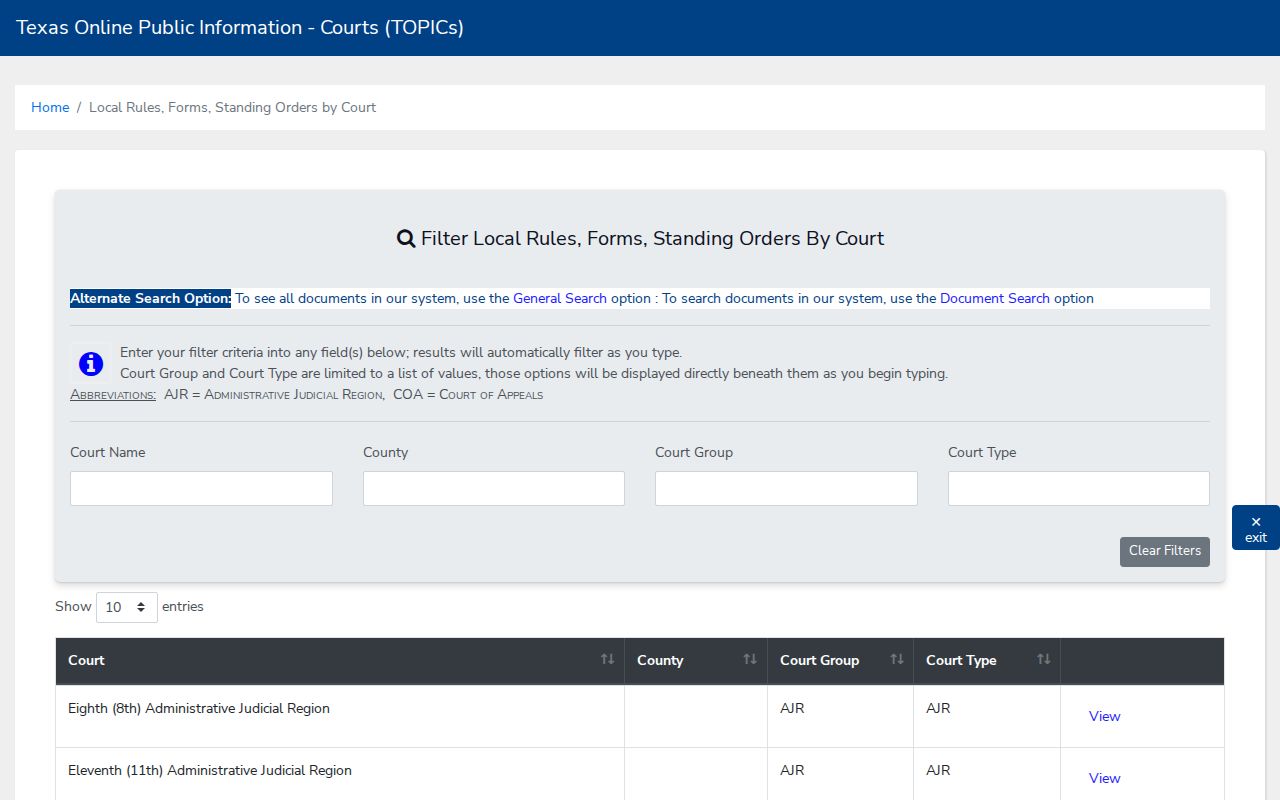
Read the rule beside the case docket and ask the clerk which current order applies. The District Clerk publishes weekday counter hours of 8:00 a.m. to noon and 1:00 to 4:00 p.m. The noon closure differs from the broad courthouse hours and should shape an in-person records trip.
The clerk's 2025 fee schedule lists a $10 search, copies at $1 per page, and certification as an added $5. Confirm that the cited item applies to the desired criminal record and request a current quote. An uncertified docket may suit personal research, while a certified judgment bears the clerk's formal certification.
Federal Cases Outside Sabine Courts
Federal charges arising in Sabine County belong to the U.S. District Court for the Eastern District of Texas. They are not filed with the Sabine District Clerk. PACER is the federal account and fee service for searching dockets and opening filed documents. Its controls include court, party or case identifiers, dates, and docket entries. Current charges and the low-usage waiver should be checked with the federal judiciary at the time of use.
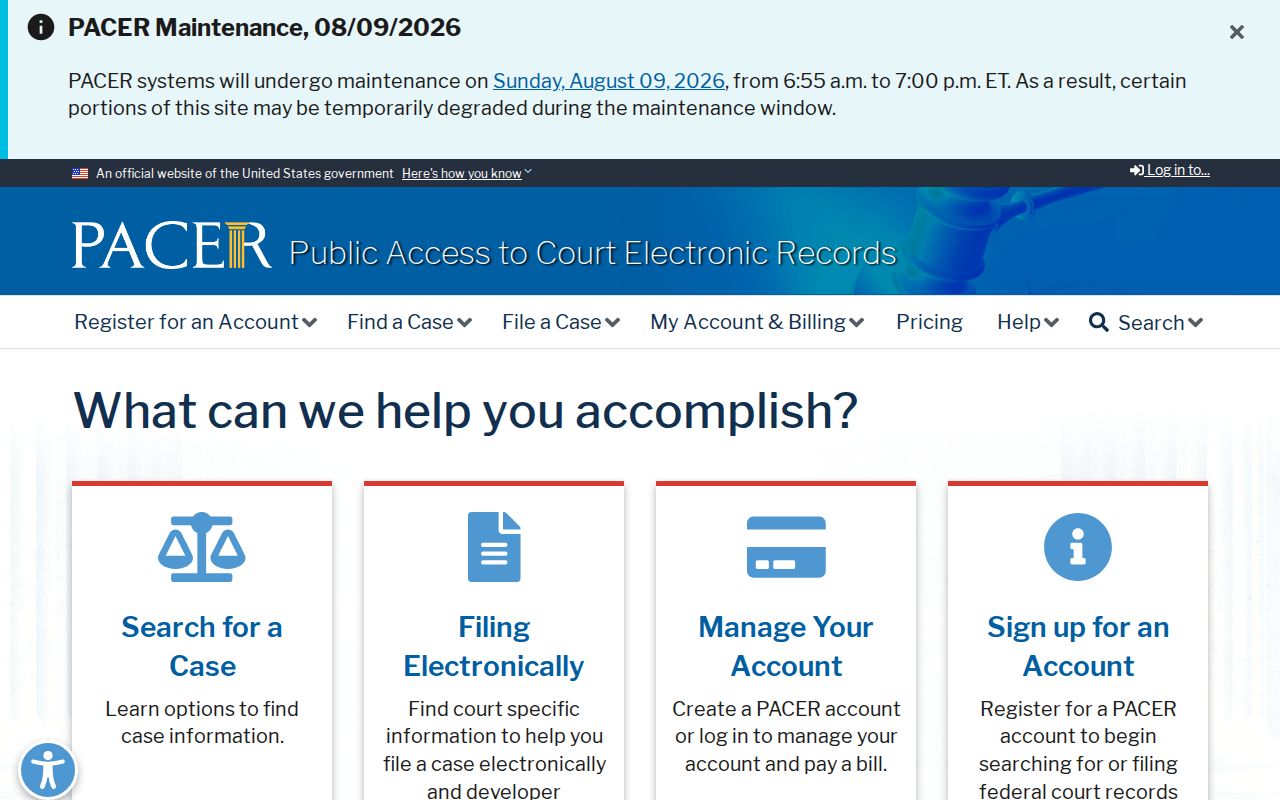
The PACER layer completes a jurisdiction check when the conduct was local but the prosecution was federal. It should not be mixed with the Sabine County cause index.
Access & Restrictions
Texas court records are obtained from the clerk that maintains them. The Texas Public Information Act governs access to existing government information, while court-record access also follows judicial rules and orders. Public access does not override confidentiality. Juvenile files, sealed records, protected victim or minor details, Social Security numbers, financial-account data, and other confidential criminal-history information can be withheld or redacted.
Redaction gives the requester a public copy with protected details removed. Sealing blocks ordinary public inspection under legal authority. Expunction under Chapter 55A may direct covered agencies to remove, destroy, or return eligible records. Nondisclosure instead restricts public release while preserving access for specified agencies. None of those outcomes should be inferred from a missing online entry.
When a case is absent, ask which years are electronic, whether an archived index must be checked, and whether the cause sits in another court. For a felony, contact Lisa Pitre's District Clerk office at 201 Main Street, P.O. Box 850, Hemphill, Texas 75948, (409) 787-2912, or districtclerk@co.sabine.tx.us.